
Shower Waterproofing Explained: Systems, Pros, and Cons
Learn why proper shower waterproofing is essential to prevent leaks, mold, and costly damage. This guide breaks down the most common waterproofing systems, along with their pros and cons, to help you choose the right solution for a durable, long-lasting shower.
John Victor Silva
4/7/2026
The Importance of Proper Shower Waterproofing (and Understanding Your Options)
When it comes to bathroom remodeling, waterproofing is one of the most critical — and most overlooked — parts of the entire project. While tile, fixtures, and finishes get most of the attention, it’s what’s behind the walls and under the tile that determines whether your shower lasts for years or starts failing prematurely.
Why Waterproofing Matters
Tile and grout are not waterproof. They are water-resistant at best, which means moisture will eventually pass through them. Without a proper waterproofing system in place, water can reach the substrate behind the tile, leading to:
Mold and mildew growth
Wood rot and structural damage
Tile failure (loose or cracked tiles)
Costly repairs down the line
A properly waterproofed shower acts as a sealed system, directing water safely to the drain while protecting the surrounding structure.
Common Shower Waterproofing Systems
There are several methods used in the industry today. Each has its own strengths and limitations.
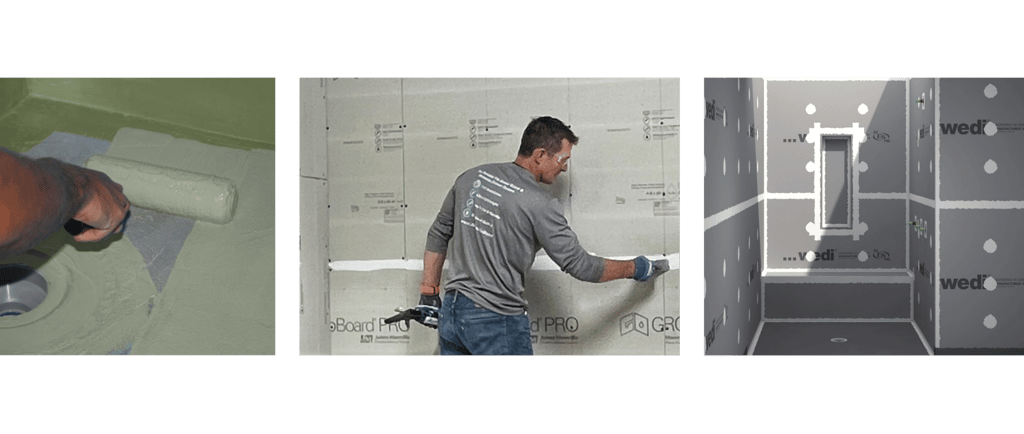
1. Liquid-Applied Waterproofing Membranes
These are roll-on or brush-on products applied directly over cement board or other approved substrates.
Pros:
Seamless application (no joints if done correctly)
Ideal for custom showers, niches, and detailed areas
More budget-friendly compared to other systems
Cons:
Must be applied at the correct thickness to be effective
Requires multiple coats and proper curing time
Heavily dependent on installer attention to detail
2. Traditional Shower Pan (Mud Bed + Liner)
A long-standing method that uses a waterproof liner beneath a mortar bed.
Pros:
Time-tested system when installed properly
Lower upfront material cost
Widely recognized and used
Cons:
Mortar bed can retain moisture over time
Higher risk of mold or odor issues if not built correctly
Requires precise slope and drainage setup
3. Foam Board Systems (Integrated Systems)
Pre-manufactured waterproof boards and components designed to create a complete waterproof system.
Pros:
Lightweight and efficient to install
Fully integrated waterproofing solution
Faster installation timeline
Cons:
Higher material cost
Must follow manufacturer guidelines closely
System components can be more expensive
Choosing the Right System
There is no one-size-fits-all solution. The best waterproofing system depends on:
Project budget
Shower design and complexity
Timeline
Installer experience
What matters most is not just the product used, but how well it is installed. Even the highest-quality system can fail if installation is not done correctly.
Final Thoughts
Waterproofing is not an area to cut corners. It’s a critical part of your shower system that directly impacts durability, performance, and long-term reliability. Investing in proper waterproofing ensures your shower not only looks great but also holds up over time.
If you’re planning a remodel, it’s important to discuss waterproofing options early so the right system can be selected and installed correctly from the start.
SCHEDULE A FREE ESTIMATE
(321) 462-9088
Copyright © 2026 Precision Home Improvement, All rights reserved.
YOUR VISION INTO REALITY.
GET IN TOUCH
CONTACT@PRECISIONRLLC.COM
PRECISION home Improvement